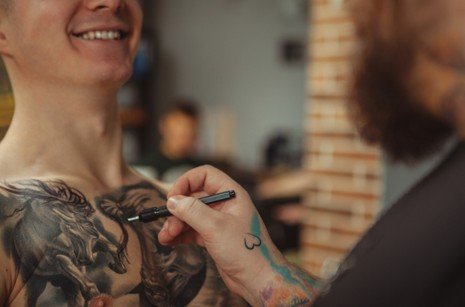
Fading for a cover-up?
Some clients want complete removal, others simply want to lighten an existing tattoo to make room for a new design. Fading (or “lightening”) is often the smarter option if you’re planning a cover-up. Reducing pigment density allows for:
More flexibility in design
Better colour outcomes
Less need for heavy, dark reworking
The goal isn’t always to erase — sometimes it’s to create a cleaner foundation. If you’re planning a cover-up, involving your tattoo artist early makes a real difference. I can make a plan to work to a specific level of fade requested by your artist or focus on targeted areas. This keeps the process efficient and avoids over-treating the skin.
If you already have an artist in mind, bring their input to your consultation — it helps guide a more precise plan.
Start with a consultation & a considered, clinical approach
We’ll assess your tattoo, talk through your goals, and map out a realistic plan — whether that’s full removal or staged fading for a future design. Every treatment plan is tailored based on your tattoo history, skin type and overall health. I focus on safety, protecting the surrounding skin and allowing adequate time for healing in between sessions. This isn’t a quick fix — but done properly, it gives you better long-term results.
Artistic Tattoo Removal & Tattoo Fading (Cover-Up Preparation).
Remove it completely — or create space for something better
Tattoos are designed to be permanent. Once ink is placed into the dermal layer, it sits below the surface where normal skin turnover can’t reach it. The pigment particles are too large for the body to naturally clear, so they remain suspended within the skin’s collagen — which is why tattoos stay visible over time.
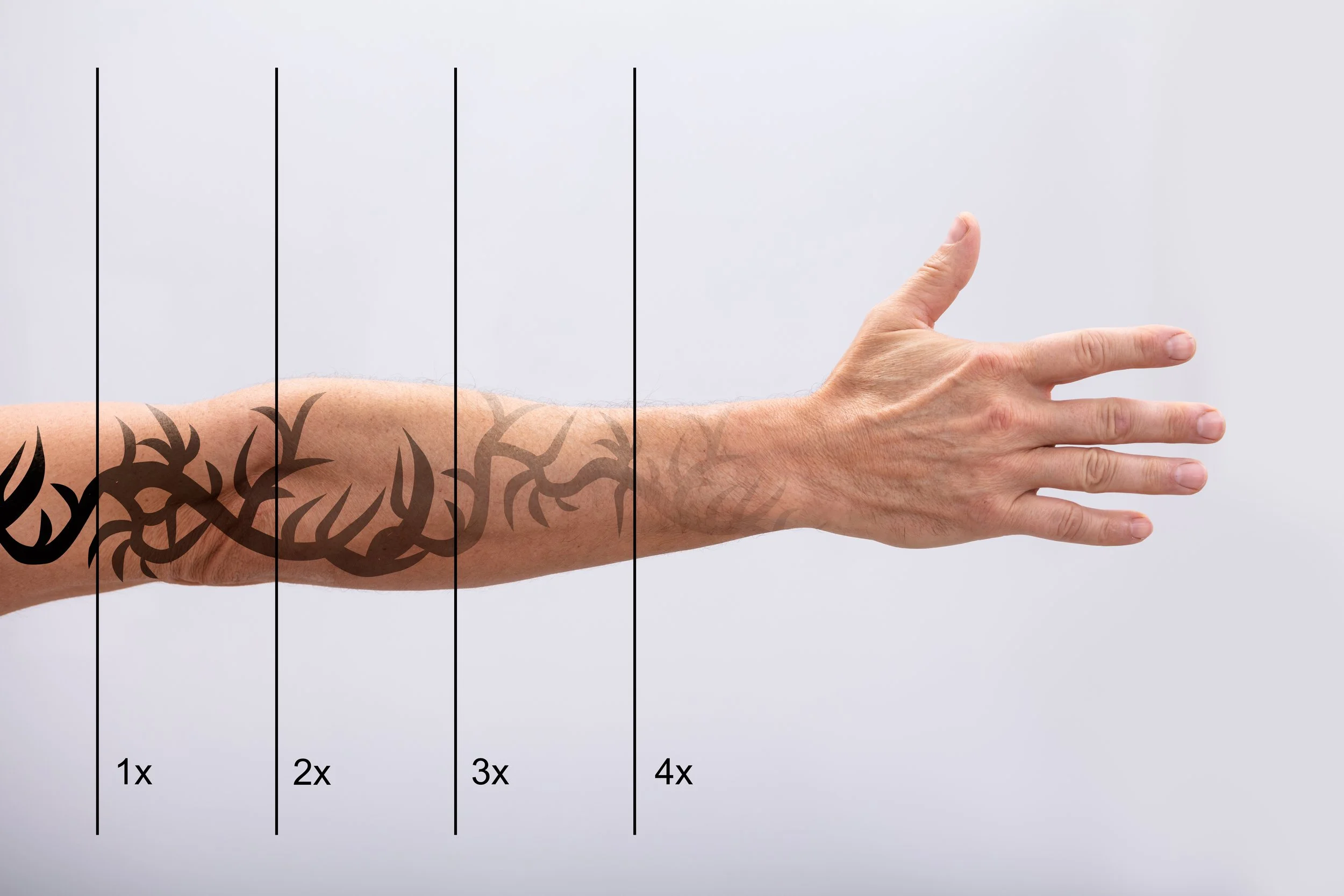
Laser tattoo removal works by delivering targeted light energy into the skin, breaking ink particles into smaller fragments that your body can gradually clear. This process takes time, and results vary depending on the tattoo and the individual.
Not all tattoos are the same — and neither is the approach
Every tattoo responds differently. Treatment is influenced by:
Ink colour and composition
Depth and layering of pigment
Tattoo style (professional vs amateur, dense vs fine line)
Skin type and tone
Your body’s immune response
Black ink typically responds fastest. Brighter colours such as blue, green and red often require multiple wavelengths and a more staged approach. There’s no “one setting fits all” in safe laser practice — precision matters.